Heroes Arrive: The Typography of Strength and Adventure
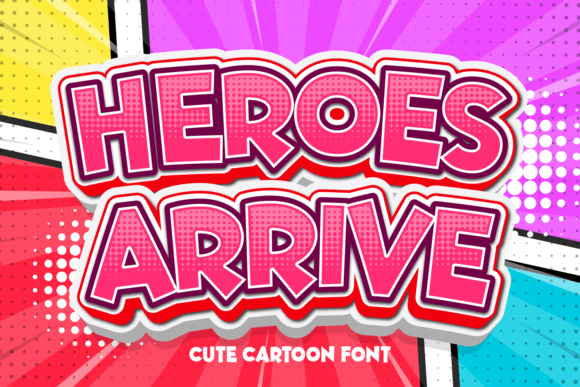
In the vast landscape of digital design, typography serves as the silent narrator of a brand's story. While serif fonts whisper tradition and sans-serif fonts shout modernity, there exists a niche category designed to evoke specific emotional responses related to action, courage, and whimsy. Heroes Arrive is a prime example of this specialized typeface. It is a cute cartoon font that defies the typical expectations of "heroic" lettering by blending bold structural strength with rounded, approachable edges. This unique combination makes it an ideal choice for brands that want to convey a sense of strength, adventure, and heroism, particularly in the entertainment and gaming industries.
The visual language of Heroes Arrive speaks directly to the imagination. It captures the essence of a comic book panel or a video game title screen where the stakes are high, yet the tone remains inviting rather than intimidating. For designers and business owners navigating the competitive markets of children's media, indie gaming, and family-oriented entertainment, understanding the nuances of this font can be the difference between a logo that gets noticed and one that blends into the background.
The Anatomy of a Cartoon Hero Font
To truly appreciate the utility of Heroes Arrive, one must first deconstruct its typographic DNA. Unlike standard display fonts that rely on uniform stroke widths, this typeface employs a dynamic variation in thickness that mimics hand-drawn illustrations. The letters are thick and substantial, providing the weight necessary to command attention, yet they are softened by generous curves and rounded terminals.
This duality is what sets it apart from other bold fonts. A traditional heavy slab serif might feel too rigid or industrial for a children's app, while a thin script font lacks the impact required for a game title. Heroes Arrive strikes a balance. The "cute" aspect comes from the slight irregularities and the friendly curvature of the bowls and counters, suggesting playfulness. Simultaneously, the "strength" is derived from the overall mass of the characters and the confident slant often associated with motion and speed.
When analyzing the character set, users will notice that the glyphs are designed to interlock naturally. This feature is crucial for logotypes where spacing needs to be tight to create a unified emblem. The font's architecture supports both uppercase dominance and mixed-case scenarios, allowing for versatility in how the message is delivered. Whether used for a short, punchy tagline or a longer descriptive header, the font maintains its legibility without sacrificing its distinct personality.
Strategic Applications in Gaming and Entertainment
The primary ecosystem where Heroes Arrive thrives is the intersection of gaming and entertainment. In these sectors, the visual identity must immediately communicate the genre and the target audience. For mobile games targeting younger demographics, the font acts as a beacon of fun and safety. It signals that the content is engaging but not overly aggressive or scary.
Consider the workflow of a game developer creating a new platformer. The title screen is the first point of contact for the player. Using a font like Heroes Arrive instantly establishes the mood. It suggests a world where the protagonist is capable and brave, yet the journey is filled with lighthearted challenges. This aligns perfectly with the current trend in the industry toward "cozy gaming" or family-friendly adventures that prioritize exploration over combat.
- Mobile Game Titles: The bold nature of the font ensures readability on small screens, which is critical for app store icons and splash screens.
- Character Dialogue: In animated series or interactive stories, using this font for speech bubbles can differentiate the main hero from other characters, adding a layer of visual storytelling.
- Merchandise Branding: From t-shirts to plush toys, the font translates well to physical products, maintaining its charm when embroidered or printed on fabric.
Beyond gaming, the entertainment sector utilizes this typeface for event promotions, such as comic conventions or superhero-themed birthday parties. The font's inherent energy makes it suitable for posters and invitations where the goal is to generate excitement. It bridges the gap between professional graphic design and the DIY aesthetic often celebrated in fan communities.
Visual Hierarchy and User Engagement
Effective use of Heroes Arrive requires an understanding of visual hierarchy. Because the font is inherently loud and decorative, it should generally be reserved for headlines, logos, and key call-to-action buttons. Attempting to use it for body text would result in poor readability and visual fatigue. The thick strokes and complex shapes demand space around them to breathe.
Designers often pair this font with a clean, neutral sans-serif for supporting text. This contrast allows the Heroes Arrive elements to pop while ensuring that the informational content remains accessible. For instance, a website for a youth sports league might use the font for the team name and motto, while using a simple Arial or Helvetica for the schedule and roster details. This strategic pairing leverages the font's strengths without overwhelming the user experience.
Cultivating Brand Identity Through Typography
For business owners and creators, selecting a font is never just an aesthetic decision; it is a branding strategy. Heroes Arrive offers a specific narrative arc that brands can adopt. It tells the consumer that the company values creativity, bravery, and fun. This is particularly relevant for startups in the EdTech space, where the goal is to make learning feel like an adventure.
Educational platforms often struggle to make their content appealing to children who are accustomed to the gamified experiences of smartphones and tablets. By incorporating a font that feels like a video game asset, these platforms can reduce the perceived barrier to entry. When a child sees a lesson titled in Heroes Arrive, they subconsciously associate the activity with the positive emotions of playing a game. This psychological trigger can significantly increase engagement rates and time-on-page metrics.
Furthermore, the font supports the concept of "hero's journey" marketing. Brands that position themselves as guides helping customers overcome obstacles can use this typeface to reinforce that metaphor. It transforms a mundane service into an epic quest. For example, a fitness app for kids could frame workout routines as "missions," using the font to label achievements and milestones. The typography becomes an active participant in the user's motivation, rather than a passive container for text.
Technical Considerations and Implementation
While the creative potential of Heroes Arrive is vast, practical implementation requires attention to technical details. As a display font, it may have limited character sets compared to comprehensive text fonts. Designers must verify that the font includes all necessary ligatures, alternate characters, and special symbols required for their specific project. Some versions of cartoon-style fonts may lack certain diacritics, which can be a hurdle for international projects.
Kerning and tracking are also critical factors. Due to the organic shapes of the letters, automatic kerning settings in design software may not always produce the best results. Manual adjustment is often necessary to ensure that the spacing between characters feels intentional and balanced. This is especially true when the font is used at large sizes for logos, where even a millimeter of misalignment can disrupt the visual flow.
Web developers should also consider the performance implications of loading custom web fonts. Since Heroes Arrive is likely a heavier file due to its complex vector paths, optimizing the font file size is essential for maintaining fast page load times. Techniques such as subsetting (including only the characters actually used on the site) and using modern font formats like WOFF2 can mitigate these issues. Ensuring that the font renders correctly across different browsers and operating systems is another vital step in the deployment process.
The Evolution of Playful Typography
The rise of fonts like Heroes Arrive reflects a broader shift in design trends. There is a growing appreciation for imperfection and human touch in digital spaces. In an era dominated by sleek, minimalist interfaces, there is a counter-movement celebrating nostalgia, hand-crafted aesthetics, and expressive communication. This font embodies that spirit, offering a way to inject personality into designs that might otherwise feel sterile.
As the boundaries between gaming, education, and mainstream media continue to blur, the demand for versatile typefaces that can traverse these genres will only increase. Heroes Arrive positions itself at the forefront of this evolution. It proves that a font can be simultaneously strong and soft, serious and silly, professional and playful. This adaptability makes it a valuable tool in the arsenal of any designer looking to tell a compelling story.
Ultimately, the success of a design project often hinges on the ability to connect emotionally with the audience. By choosing a font that resonates with the themes of adventure and heroism, creators can forge a deeper bond with their users. Whether it is a logo for a new startup, a title for an indie game, or a header for an educational blog, Heroes Arrive provides the visual foundation needed to bring those ideas to life. It reminds us that even in the digital realm, the power of a good story—and the right words to tell it—remains timeless.