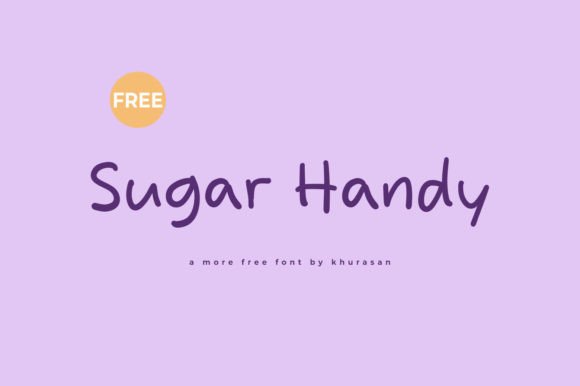
Sugar Handy: A Strategic Typography Choice for Modern Branding
In the crowded digital landscape, visual differentiation is not merely an aesthetic preference; it is a critical business imperative. For entrepreneurs, marketers, and creative professionals aged 20 to 50, the selection of typeface often dictates the initial perception of a brand's authority, warmth, and reliability. Sugar Handy emerges as a significant asset in this arena, offering a modern and fancy handwriting style that bridges the gap between casual approachability and sophisticated design. Unlike generic script fonts that can appear dated or overly decorative, Sugar Handy provides a distinct character suitable for high-stakes applications such as posters, logos, magazines, book covers, and banners.
The strategic value of Sugar Handy lies in its versatility. It is designed to be matched with an incredibly large set of projects, allowing decision-makers to maintain a consistent visual identity across diverse mediums without sacrificing impact. However, integrating a handwriting font into a professional portfolio requires more than just downloading a file; it demands a thoughtful approach to how typography influences user psychology and brand positioning. This analysis explores how to leverage Sugar Handy intentionally to achieve better results, avoid common pitfalls, and enhance long-term creative outcomes.
Understanding the Visual Language of Sugar Handy
Typography is the voice of your visual content. When you choose a font like Sugar Handy, you are selecting a specific tone of communication. As a modern handwriting font, it mimics the organic flow of human penmanship but refines it for screen and print clarity. This duality makes it particularly effective for brands that wish to convey authenticity while maintaining a polished, contemporary edge.
For small business owners and freelancers, the "handwritten" aspect of Sugar Handy signals personal touch and craftsmanship. In a market saturated with rigid, corporate sans-serifs, this font can humanize a brand instantly. It suggests that there is a real person behind the logo or the magazine cover, fostering a sense of connection with the audience. However, this perceived intimacy must be managed carefully. The "fancy" elements of the font imply a level of elegance and care, making it unsuitable for contexts requiring stark minimalism or industrial severity.
Strategically, Sugar Handy functions best when the goal is to evoke emotion, creativity, or exclusivity. It is a tool for differentiation. If your competitors are all using bold, blocky lettering to project strength, introducing Sugar Handy can position your brand as the innovative, softer, yet equally confident alternative. This contrast is a powerful lever in marketing strategy, allowing you to capture attention through unexpected visual cues.
Strategic Applications Across Key Media
The utility of Sugar Handy extends far beyond simple text decoration. Its design characteristics make it robust enough for headlines and versatile enough for sub-headers, provided it is paired correctly. Understanding where to deploy this font is essential for maximizing its return on investment.
- Logos and Brand Identity: For startups and lifestyle brands, a logo incorporating Sugar Handy can establish immediate memorability. The fluid lines create a unique silhouette that stands out in app stores, social media profiles, and business cards. When designing a logo, consider how the font scales. Sugar Handy retains its charm at smaller sizes, which is crucial for mobile responsiveness.
- Posters and Banners: In event marketing or promotional campaigns, readability from a distance is paramount. Sugar Handy works exceptionally well here because its strokes are distinct and open. Use it for the primary headline to grab attention, ensuring it contrasts sharply against the background color. This application transforms a standard announcement into an artistic statement.
- Magazines and Book Covers: Publishers and bloggers understand that the cover is the first point of sale. Sugar Handy adds a layer of sophistication to editorial designs. On a book cover, it can suggest a memoir, a self-help guide, or a creative non-fiction work, setting reader expectations before they even read the synopsis.
- Digital Marketing Assets: From email headers to social media graphics, consistency is key. Using Sugar Handy across these channels creates a cohesive narrative. It helps in building brand recognition, as audiences begin to associate the specific curvature of the letters with your company's values.
Integrating Sugar Handy into Your Creative Workflow
To get the most out of Sugar Handy, it should not be treated as an isolated element but as part of a broader typographic system. A common mistake among creators is overusing script fonts, leading to visual fatigue and reduced legibility. The strategic approach involves pairing Sugar Handy with a clean, neutral sans-serif or serif font for body text.
This combination balances the personality of the handwriting style with the functionality of readable text. For example, use Sugar Handy for the main title of a presentation slide, and a standard font for the bullet points. This hierarchy guides the viewer's eye, ensuring that the emotional hook of the title is supported by clear, actionable information. By planning your layout with this pairing in mind, you ensure that the design remains professional and accessible.
Furthermore, consider the context of your audience. While Sugar Handy is perfect for a boutique bakery, a law firm, or a tech startup, it may need to be used sparingly or avoided entirely if the core message relies on strict authority or data density. Decision-makers must evaluate whether the "lovely designs" created with this font align with the serious nature of their industry. If the answer is yes, proceed with confidence; if not, reconsider the typographic strategy.
Risks of Unintentional Usage
While Sugar Handy offers immense potential, its misuse can undermine credibility. The primary risk lies in applying the font without a clear strategic goal. Randomly inserting a fancy handwriting font into a document or website can signal a lack of professionalism or a misunderstanding of design principles. It can make a brand appear amateurish if the execution feels haphazard.
Legibility is another critical factor. Handwriting fonts, by nature, can be difficult to decipher if the spacing (kerning) is too tight or if the background color clashes with the text. Before finalizing any design, test Sugar Handy in various environments. Does it remain clear on a dark background? Is it readable on a mobile device? These practical checks are non-negotiable for anyone serious about achieving better results.
Additionally, there is the risk of trend dependency. While Sugar Handy is described as modern, design trends evolve. Relying too heavily on a single stylistic choice can date a brand quickly. To mitigate this, focus on the underlying principle of the font—authenticity and elegance—rather than just the specific shapes. This mindset allows you to adapt your visual identity over time while retaining the core essence of your brand.
Decision-Making Framework for Implementation
Before adding Sugar Handy to your creative toolkit, apply a structured decision-making process. Ask yourself three fundamental questions: What is the objective of this design? Who is the target audience? How does this font support the overall brand narrative?
If the objective is to create a sense of luxury, warmth, or creativity, Sugar Handy is a strong candidate. If the target audience consists of younger demographics or those seeking personalized experiences, the font aligns well with their preferences. Finally, ensure that the font supports, rather than distracts from, the brand narrative. It should enhance the message, not overshadow it.
Planning also involves technical preparation. Ensure you have the necessary licenses for commercial use, especially if the font will be used in logos or products for sale. Check the file formats available and ensure compatibility with your design software. These logistical steps are often overlooked but are vital for smooth operations and avoiding legal complications later.
Long-Term Value and Brand Consistency
The true measure of a successful design decision is its longevity. Fonts like Sugar Handy, when used strategically, contribute to a durable brand identity. They become synonymous with the brand itself. Think of major companies that have maintained a consistent typographic style for decades; their success is partly due to this visual continuity.
By adopting Sugar Handy intentionally, you are investing in a visual asset that can grow with your business. It allows for flexibility in future campaigns while maintaining a recognizable thread. Whether you are launching a new product line, redesigning a website, or creating a series of educational materials, having a go-to font streamlines the creative process and ensures quality control.
Moreover, the ability to match Sugar Handy to an incredibly large set of projects means you can scale your design efforts efficiently. Instead of searching for a new font for every new initiative, you can rely on a proven tool that delivers consistent results. This efficiency frees up time and resources for other critical aspects of your business, such as content creation, customer engagement, and strategic planning.
Conclusion: Intentionality Over Impulse
Sugar Handy is more than just a fancy handwriting font; it is a strategic instrument for modern communication. Its capacity to create lovely designs that stand out makes it a valuable addition to the arsenal of entrepreneurs, marketers, and creators. However, its power is unlocked only through intentional use. By understanding its strengths, limitations, and appropriate contexts, you can harness its potential to elevate your brand, engage your audience, and achieve your professional goals.
Approach Sugar Handy not as a quick fix, but as a deliberate choice that reflects your commitment to quality and creativity. When used with purpose, it transforms ordinary projects into memorable experiences, proving that the right typography can indeed make a difference in the competitive world of design and business.