Quinnie: The Retro Serif Font That Brings Vintage Elegance to Modern Design
In the ever-evolving landscape of digital and print design, there is a persistent hunger for authenticity. While minimalist sans-serifs dominate user interfaces and corporate reports, a counter-movement is gaining momentum in branding, editorial design, and creative marketing. This movement looks backward to move forward, embracing the textures, curves, and character of the past. At the forefront of this nostalgic resurgence is Quinnie, a stylish, slightly retro serif font that captures the essence of vintage elegance with remarkable precision.
Unlike generic typefaces that attempt to mimic old styles without understanding their soul, Quinnie offers a bold, distinctive approach. Its letterforms are not merely decorative; they are functional tools designed to command attention while whispering stories of timeless sophistication. Whether you are crafting a headline for a luxury lifestyle blog or designing a poster for an indie film festival, this unique typeface provides the perfect balance between historical charm and contemporary utility.
The Anatomy of Vintage Sophistication
To truly appreciate why Quinnie stands out, one must look closely at its construction. It is a serif typeface, but it avoids the rigid formality often associated with traditional fonts like Times New Roman. Instead, Quinnie embraces a "slightly retro" aesthetic that feels more like a curated museum piece than a dusty relic. The strokes vary in weight with a fluidity that mimics the hand of a master calligrapher from the mid-20th century.
The defining characteristic of Quinnie is its boldness. In an era where screens demand high legibility, many designers shy away from heavy serifs, fearing they will clutter the visual field. However, Quinnie defies this convention. Its thick verticals and sharp, yet softened, terminals create a strong visual anchor. This makes it exceptionally effective for headlines where impact is paramount. When used in large sizes, the subtle nostalgic flair of the font becomes immediately apparent, evoking the golden age of cinema, classic travel posters, and high-end fashion magazines.
Distinctive Letterforms and Character
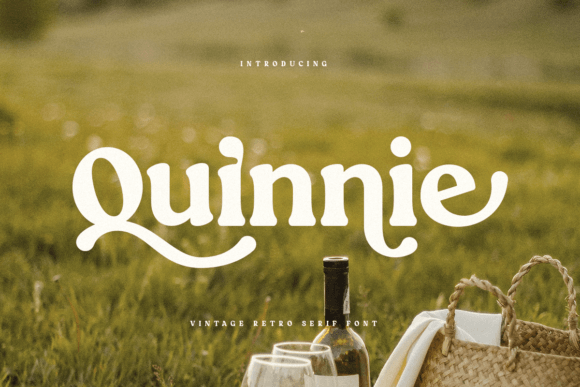
What separates Quinnie from other retro-inspired fonts is the specific treatment of its individual characters. The lowercase 'g' features a double-story structure that feels organic rather than mechanical. The capital 'Q' often boasts a tail that sweeps elegantly, adding a touch of whimsy without sacrificing readability. These details are not accidental; they are carefully engineered to give the font personality.
This personality is crucial for branding. A logo needs to speak before the brand name is even read. With Quinnie, the message is clear: this brand values heritage, quality, and style. The font’s slight irregularities prevent it from feeling sterile, inviting the viewer to linger on the text. This is particularly important in the current market, where consumers are increasingly drawn to brands that feel human and authentic rather than algorithmically generated.
Practical Applications in Modern Workflows
While the aesthetic of Quinnie is rooted in the past, its application is thoroughly modern. Designers today work across a multitude of platforms, from mobile apps to massive billboards, and a versatile font is essential for navigating these diverse environments. Quinnie fits seamlessly into modern workflows because it is designed to be both striking and adaptable.
Elevating Editorial and Publishing
One of the most natural homes for Quinnie is in editorial design. Magazines, whether digital or print, rely heavily on typography to establish hierarchy and tone. Using Quinnie for main headlines can instantly transform a standard article layout into something that feels premium and curated. Imagine a feature story about sustainable fashion or artisanal coffee; pairing the content with the bold, distinctive letterforms of Quinnie reinforces the narrative of craftsmanship and timelessness.
Furthermore, the font works beautifully in long-form journalism when paired with a clean, neutral sans-serif for body text. This combination creates a dynamic contrast that guides the reader's eye effortlessly through the content. The serif headlines grab attention, while the sans-serif body ensures comfortable reading, a classic pairing that never goes out of style.
Branding and Identity Systems
For businesses looking to differentiate themselves in a crowded marketplace, Quinnie offers a powerful solution. Classic branding often suffers from being too safe or too generic. By incorporating Quinnie into a logo or brand identity, companies can inject a sense of history and reliability. This is particularly effective for industries such as hospitality, boutique retail, and artisanal food and beverage.
Consider a new craft brewery or a high-end bakery. Their packaging needs to stand out on a shelf lined with competitors using loud, aggressive graphics. A label featuring Quinnie suggests a product made with care, perhaps using a recipe passed down through generations. The subtle nostalgic flair acts as a silent salesperson, communicating quality before the customer even picks up the bottle or loaf.
Poster Design and Event Marketing
Eye-catching posters remain a vital tool for event promotion, from music festivals to art exhibitions. Quinnie is perfectly suited for this medium due to its scalability and impact. When blown up to poster size, the intricate details of the serifs become a focal point, drawing people in from a distance. The bold nature of the font ensures that key information—dates, times, and names—is communicated clearly and memorably.
Designers can also play with the spacing and alignment of Quinnie to create dynamic compositions. Because the letters have such strong shapes, they can be stacked, overlapped, or kerned tightly to create abstract patterns that still retain their legibility. This flexibility allows for creative experimentation that static, uniform fonts cannot support.
Strategic Considerations for Adoption
Before integrating Quinnie into a project, it is wise to consider how it interacts with other design elements. While the font is versatile, it is not a "one-size-fits-all" solution. Its strong personality means it should be used strategically to avoid overwhelming the design.
- Pairing Choices: Quinnie shines when paired with simple, geometric sans-serifs. Avoid pairing it with other ornate serifs, as this can lead to visual competition and confusion.
- Color Palette: To enhance the vintage elegance, consider using muted earth tones, deep navys, or rich burgundies. High-contrast combinations like black and white also work well to highlight the bold letterforms.
- Size Matters: Due to its detailed serifs, Quinnie should generally be reserved for headings and display purposes. While it is readable at smaller sizes, its true potential is unlocked when given room to breathe.
- Audience Perception: Think about your target audience. If you are targeting a demographic that values tradition, luxury, or nostalgia, Quinnie will resonate deeply. For ultra-modern tech startups seeking a futuristic look, it might feel too warm and organic.
Navigating the Digital Landscape
In web design, loading speed and rendering consistency are critical. Fortunately, modern font technologies have made it easier than ever to implement complex typefaces like Quinnie without compromising performance. Using variable font formats or optimized web fonts ensures that the subtle nuances of the serifs render correctly across different devices and browsers.
Moreover, the trend of "retro-futurism" in UI design suggests that users are becoming more open to stylized typography on screens. As long as the hierarchy is maintained and the font is used appropriately for headers rather than dense blocks of text, Quinnie can add a layer of sophistication to websites that often feel cold and utilitarian.
Cultivating a Timeless Aesthetic
The ultimate goal of using a font like Quinnie is to elevate designs with a touch of timeless sophistication. Trends come and go, but good design endures. By choosing a typeface that honors the past while remaining relevant to the present, designers can create work that feels fresh today and remains appealing years from now.
Whether you are a graphic designer, a brand strategist, or a content creator, the choice of typography is one of the most impactful decisions you make. It sets the mood, dictates the rhythm, and influences how your message is received. Quinnie offers a unique opportunity to break away from the mundane and embrace a style that is both confident and charming.
As you explore your next project, consider the power of a single font to tell a story. Let the bold, distinctive letterforms of Quinnie guide your creativity. From standout headlines to classic branding, this unique typeface is ready to help you craft visuals that not only capture attention but also hold it, leaving a lasting impression of elegance and style.