Evaluating the More Good Vibes Duo: A Practical Guide for Designers
In the crowded landscape of digital typography, finding a font family that balances aesthetic charm with functional versatility is often a challenge. The More Good Vibes Duo has emerged as a notable option for designers seeking to infuse warmth and personality into their projects without sacrificing readability. This typeface pair combines a handwritten script with a clean sans-serif, offering a distinct visual language that appeals to a wide range of creative applications. For professionals and hobbyists alike, understanding the specific strengths, limitations, and ideal use cases of this duo is essential before integrating it into a design system.
Understanding the Core Components of the Duo
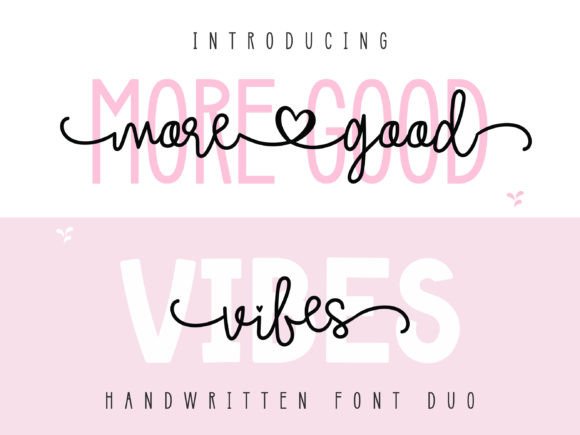
The primary appeal of the More Good Vibes Duo lies in its composition. It is not merely a single font but a coordinated pair designed to work in harmony. The first component is a single-line script font characterized by its cute and lovely aesthetic. Unlike traditional calligraphy that relies on heavy contrast between thick and thin strokes, this script maintains a consistent line weight, giving it a modern, approachable feel. It includes swashes—decorative flourishes that extend from certain letters—which add a touch of elegance and movement to headlines or accent text.
Paired with the script is a complementary sans-serif typeface. Sans-serif fonts are known for their lack of decorative strokes at the ends of characters, making them highly legible and neutral. In the context of the More Good Vibes Duo, this sans-serif acts as the grounding element. While the script provides the emotional "vibe," the sans-serif ensures that body copy remains clear and accessible. This combination allows designers to create hierarchies where the script draws attention and the sans-serif delivers information efficiently.
The Role of Swashes and Handwritten Elements
A defining feature of the script portion is the inclusion of swashes. These elements can be used strategically to frame logos, underline titles, or connect words in a way that feels organic rather than mechanical. However, the utility of these swashes depends heavily on the layout. In tight spaces or small sizes, excessive decoration can hinder readability. Therefore, the More Good Vibes Duo requires a designer who understands when to deploy these features for maximum impact and when to rely on the cleaner character set.
Comparing Versatility Against Standard Typeface Categories
When evaluating the More Good Vibes Duo against other options in the market, its versatility becomes a key differentiator. Many font families are specialized; some are strictly for display (headlines only), while others are purely for body text. This duo attempts to bridge that gap. Compared to a standalone script font, which often struggles with long-form text, the inclusion of the sans-serif partner significantly expands the scope of potential projects.
Conversely, when compared to standard geometric or humanist sans-serifs available in most operating systems, the More Good Vibes Duo offers a level of customization and thematic cohesion that generic pairs lack. While a designer could manually pair a free Google Font script with a standard Arial or Helvetica, the result may lack the subtle tuning found in a dedicated duo. The letter spacing, x-heights, and stroke weights in the More Good Vibes Duo are likely calibrated to ensure the two styles do not clash visually.
- Standalone Scripts: Often beautiful but limited to short phrases. They lack the supporting structure for full paragraphs.
- Standard Sans-Serif Pairs: Highly functional but often sterile, lacking the emotional resonance of a handwritten element.
- The More Good Vibes Approach: Balances emotion and function, making it suitable for branding, social media graphics, and editorial layouts that require both style and substance.
Strengths and Tradeoffs in Real-World Applications
Like any design resource, the More Good Vibes Duo comes with inherent tradeoffs. Its greatest strength is its ability to elevate designs to higher levels of engagement by injecting personality. In industries such as lifestyle, wellness, boutique retail, and personal branding, the "cute and lovely" aesthetic aligns perfectly with brand values centered on approachability and authenticity. The handwritten nature of the script suggests a human touch, which can foster a stronger connection with the audience.
However, there are limitations to consider. The playful nature of the script means it is not universally appropriate. In sectors requiring strict formality, such as legal documentation, financial reporting, or medical communications, the whimsical qualities of the More Good Vibes Duo may undermine the message's seriousness. Additionally, the single-line script style, while trendy, may date faster than more traditional serif or classic sans-serif families. Designers must weigh the desire for current trends against the need for longevity in their brand identity.
Legibility and Accessibility Considerations
Another critical factor in the evaluation process is accessibility. While the sans-serif component is generally robust, the script font with swashes presents challenges for users with visual impairments or dyslexia. The connected nature of cursive writing and the decorative extensions can make character recognition difficult. If a project prioritizes universal accessibility, the More Good Vibes Duo should be used sparingly, perhaps restricted to large headlines where the sans-serif handles all critical informational content.
Determining the Best-Fit Situations
Deciding whether to adopt the More Good Vibes Duo involves analyzing the specific goals of a project. It is an excellent choice for social media posts, wedding invitations, greeting cards, and packaging for artisanal products. In these contexts, the font helps convey a sense of care and individuality. The swashes in the script can be particularly effective in logo design, allowing for unique arrangements that stand out in a crowded marketplace.
For web design, the duo works well for landing pages that aim to convert through emotional appeal. A headline written in the script font can capture attention immediately, while the sans-serif ensures that the user can easily scan the benefits and call-to-action buttons. However, for content-heavy websites like news portals or technical blogs, the script might be too distracting if used beyond occasional accents.
When to Look for Alternatives
There are scenarios where another option is clearly superior. If a project demands high-density text, such as a book or a long-form article, a dedicated serif or a more neutral sans-serif family would be more appropriate. Similarly, if the brand identity is built on minimalism or industrial aesthetics, the "lovely" and "cute" descriptors of the More Good Vibes Duo may feel tonally inconsistent. In such cases, a monoline sans-serif without the script pairing, or a stark geometric font, would serve the design intent better.
Furthermore, budget and licensing play a role. While many font duos offer great value, designers must verify the license terms. Does the license cover commercial use? Are there restrictions on the number of users or installations? Comparing these logistical factors alongside the aesthetic qualities is part of a thorough evaluation.
Strategic Implementation for Creative Ideas
To get the most out of the More Good Vibes Duo, designers should focus on balance. The temptation to overuse the script font is common, given its charm. However, restraint often yields better results. Using the script for headings and the sans-serif for subheads and body text creates a clear visual hierarchy. Mixing the two within a single sentence can look cluttered and unprofessional unless executed with extreme precision.
Color and texture also influence how the font is perceived. Pairing the handwritten script with soft pastels, watercolor backgrounds, or textured paper effects enhances its natural vibe. Conversely, placing it against high-contrast, dark backgrounds can make the single-line strokes pop, creating a modern, edgy interpretation of the "good vibes" concept. Experimentation with these variables allows the More Good Vibes Duo to adapt to various moods while retaining its core identity.
Final Thoughts on Selection
Ultimately, the decision to use the More Good Vibes Duo rests on the alignment between the font's characteristics and the project's objectives. It is a powerful tool for those looking to add warmth, creativity, and a human touch to their designs. By understanding its components, comparing it to standard alternatives, and recognizing its limitations, designers can make informed choices that enhance their work. Whether for a small creative idea or a larger branding initiative, this font duo offers a versatile foundation, provided it is applied with intention and awareness of its specific aesthetic profile.