Evaluating Most Heroes: A Practical Guide to This Modern Brush Display Font
In the crowded landscape of digital typography, selecting the right typeface is often a balancing act between aesthetic appeal and functional utility. Most Heroes has emerged as a significant contender in this space, offering a modern brush style that diverges from traditional hand-lettered aesthetics. For designers, marketers, and creative professionals aged 20 to 50, understanding where this font fits within a broader toolkit is essential. Unlike generic script fonts that prioritize legibility above all else, or overly decorative scripts that sacrifice readability for flair, Most Heroes attempts to bridge the gap with a quirky yet structured approach.
This evaluation explores the specific characteristics of Most Heroes, compares it against other typographic categories, and outlines the scenarios where its application yields the best results. By examining its strengths, limitations, and ideal use cases, you can determine if this font aligns with your current project requirements or if an alternative might serve your design goals more effectively.
Defining the Character of Most Heroes
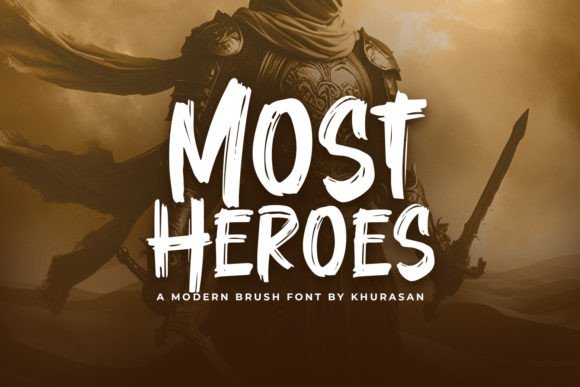
At its core, Most Heroes is classified as a modern brush display font. The term "brush" typically implies a fluid, organic quality mimicking the stroke of a paintbrush. However, Most Heroes distinguishes itself through a contemporary interpretation of this style. It retains the energy and movement associated with hand-painted lettering but incorporates a level of consistency and geometric precision that makes it suitable for professional applications beyond casual notes.
The distinctiveness of Most Heroes lies in its versatility. While many brush fonts struggle when scaled up for large formats or down for small details, this typeface maintains its structural integrity across various sizes. Its quirky nature does not come at the expense of clarity; instead, the irregularities are intentional design choices that add character without rendering the text illegible. This balance makes it particularly effective for projects that require a human touch but must still convey authority or professionalism.
When evaluating the visual weight of the font, one notices a dynamic range of stroke thickness. This variation creates a sense of rhythm and flow, which is crucial for engaging the viewer's eye in static media like posters or book covers. The font's ability to stand out is not merely a result of its boldness but also its unique personality, which sets it apart from the sea of standard sans-serifs and serifs dominating modern web design.
Comparative Analysis: Most Heroes vs. Traditional Alternatives
To understand the value proposition of Most Heroes, it is necessary to compare it with other common typographic options available to designers. When placed alongside traditional calligraphy fonts, Most Heroes offers a more streamlined and less ornate solution. Traditional calligraphy often requires extensive kerning adjustments and can become difficult to read at smaller sizes due to excessive flourishes. In contrast, Most Heroes provides a cleaner baseline, reducing the need for manual tweaking while maintaining an artistic feel.
Compared to rigid geometric sans-serif fonts, which are staples for corporate branding, Most Heroes introduces warmth and approachability. Sans-serifs are excellent for conveying neutrality and efficiency, but they often lack the emotional resonance required for lifestyle brands, creative portfolios, or entertainment-related content. Most Heroes fills this void by adding a layer of personality that rigid fonts cannot achieve. However, it is important to note that this added personality comes with trade-offs regarding formality. If a project demands strict corporate compliance or legal seriousness, a standard serif or sans-serif remains the safer choice.
Another category to consider is the distressed or grunge brush style. These fonts often simulate wear and tear, making them popular for edgy designs. Most Heroes differs by presenting a fresher, more polished look. While grunge fonts might age well for retro-themed projects, they can date quickly or appear messy in clean, minimalist layouts. Most Heroes offers a modern aesthetic that feels current without relying on texture-heavy effects that can complicate file management and printing processes.
Strengths and Tradeoffs in Design Implementation
The primary strength of Most Heroes is its adaptability across diverse mediums. Whether applied to a digital banner, a magazine cover, or a physical poster, the font scales effectively. This scalability is a critical factor for agencies working on multi-channel campaigns where brand consistency is paramount. The font's design allows it to command attention in headlines while remaining readable enough for short subheads, though it is not intended for long-form body text.
However, there are inherent tradeoffs to consider. Because Most Heroes is a display font, using it for paragraphs of text would likely hinder readability. The irregular stroke widths and playful shapes are designed to be seen from a distance or in short bursts, not scrutinized line-by-line. Designers must exercise restraint, pairing Most Heroes with a neutral companion font for body copy to ensure the overall composition remains balanced. Overusing the font can lead to visual fatigue, diminishing the impact of the design.
Furthermore, while the font is described as "quirky," this quality may not align with every brand identity. Brands that position themselves as ultra-minimalist or strictly utilitarian might find the character of Most Heroes too distracting. In such cases, the font could clash with the brand's core message rather than enhance it. Evaluating the brand voice before committing to this typeface is a necessary step in the decision-making process.
Ideal Use Cases and Strategic Applications
Determining when Most Heroes is the right choice involves analyzing the specific goals of the project. It excels in environments where creativity and individuality are valued. For instance, in the realm of event marketing, Most Heroes is highly effective for concert posters, festival banners, and workshop invitations. The energetic strokes convey excitement and movement, setting the right tone for live experiences.
Book covers represent another strong use case. In a competitive publishing market, a cover needs to grab attention instantly. Most Heroes provides the visual hook necessary to distinguish a title on a crowded shelf or a digital thumbnail. Its modern brush style appeals to genres ranging from contemporary fiction to self-help and creative non-fiction, where a personal connection with the reader is desired.
Magazine layouts also benefit from the inclusion of Most Heroes. Editors often seek fonts that can break the monotony of standard editorial typography. Using Most Heroes for feature headlines or pull quotes can inject a fresh perspective into a publication, signaling to the reader that the content within is innovative and forward-thinking. Similarly, logos for startups, artisanal products, and creative agencies can leverage the font to communicate a blend of professionalism and artistic flair.
Beyond these specific examples, the font is versatile enough for social media graphics and website headers. In digital spaces where user attention spans are short, the distinctive shape of Most Heroes helps cut through the noise. However, designers should always test the font across different devices and screen sizes to ensure the finer details of the brush strokes do not get lost on lower-resolution displays.
Decision Factors: When to Choose or Avoid
Choosing Most Heroes should be a deliberate decision based on project constraints and audience expectations. You should choose this font if your goal is to create a memorable, high-impact visual statement. It is particularly suitable when the project requires a departure from the sterile look of standard corporate typography. If your audience consists of younger demographics or those who appreciate modern, artistic design trends, Most Heroes is likely to resonate well.
Conversely, there are situations where looking for alternatives is advisable. If the project involves dense information, technical documentation, or formal legal notices, Most Heroes is not appropriate. Its decorative nature makes it unsuitable for contexts where absolute clarity and neutrality are the highest priorities. Additionally, if the brand guidelines strictly prohibit the use of handwritten or brush-style typefaces, forcing Most Heroes into the design would violate brand consistency principles.
Cost and licensing are also practical considerations. While Many fonts offer free versions with limited features, professional projects often require full commercial licenses. Before integrating Most Heroes into a client deliverable, verify the licensing terms to ensure they cover the intended scope of use, including print runs, digital distribution, and merchandise. Understanding these logistical factors prevents potential legal issues down the line.
Conclusion on Typography Selection
Ultimately, Most Heroes represents a robust option for designers seeking to infuse their work with modern energy and artistic character. It stands out in a market saturated with safe, predictable choices, offering a unique blend of quirkiness and usability. However, like any tool in a designer's kit, its effectiveness depends on how well it matches the specific needs of the project. By weighing its strengths against its limitations and considering the context of the final output, you can make an informed decision about whether this font will elevate your design or if a more conventional alternative is required.
Whether creating a striking poster, a compelling logo, or an engaging magazine spread, the key lies in strategic application. Most Heroes invites creativity, but it demands respect for its role as a display element. When used correctly, it transforms ordinary layouts into standout pieces that capture attention and communicate a distinct visual identity.