Malena Alone: A Bold Handwritten Font for Confident Design Workflows
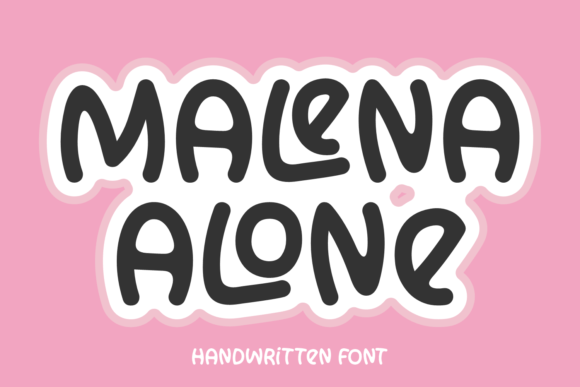
In the landscape of digital typography, where geometric sans-serifs and rigid serifs often dominate corporate communications, there is a distinct need for personality. Malena Alone fills this gap as a bold handwritten font that stands out with its strong and confident strokes. Unlike standard script fonts that can appear fragile or overly decorative, Malena Alone brings a touch of uniqueness and personality to your projects, making a bold statement with its distinctive style. For professionals ranging from graphic designers to small business owners, integrating a typeface like this requires more than just downloading a file; it demands an understanding of how it fits into the broader creative process.
This article explores the practical implementation of Malena Alone within real-world workflows. We will examine how this versatile choice for a range of creative endeavors can be utilized before, during, and after a project to enhance visual communication. By focusing on preparation, compatibility, and execution, we can ensure that the font serves as a functional asset rather than a distracting element.
Understanding the Role of Malena Alone in Visual Strategy
Before implementing any design asset, it is crucial to define its strategic role. Malena Alone is not merely a decorative element; it is a tool for emphasis and emotional connection. Its strong strokes mimic the energy of hand-painted signage or rapid sketching, which naturally draws the eye. In a workflow context, this font acts as a primary focal point generator. When planning a marketing campaign, brand identity refresh, or editorial layout, identifying where human expression is needed is the first step toward effective usage.
The font's distinctive style makes it ideal for headlines, short quotes, call-to-action buttons, and branding elements where a handmade and expressive feel is desired. However, because of its density and character weight, it is generally unsuitable for long-form body text. Understanding this limitation early in the planning phase prevents usability issues later. If your goal is to convey trust through readability, you might pair Malena Alone with a clean, neutral sans-serif. This combination allows the boldness of the handwritten font to capture attention while ensuring the supporting information remains accessible.
Pre-Project Preparation and Asset Organization
Successful integration begins with preparation. Before you open your design software, consider the technical requirements of Malena Alone. As a bold handwritten font, it relies heavily on consistent stroke width and spacing to maintain its integrity. Ensure that your design environment supports variable weights if applicable, or that you have the specific bold instance installed correctly.
Organization is key to efficiency. If you are working within a team, establish a naming convention for assets that include this typeface. Create a dedicated folder structure for "Typography" or "Brand Assets" where the font files are stored alongside usage guidelines. This ensures that everyone involved in the project—from the copywriter to the web developer—understands the intended application of the font. Consistency in file management reduces the risk of version control errors, where one team member uses a slightly different rendering of the font than another.
Furthermore, evaluate the platforms where the final output will live. Will the design be viewed on mobile devices, printed on large format banners, or displayed on high-resolution monitors? Malena Alone's intricate details may require higher resolution exports for print to prevent pixelation. For web use, consider converting critical text elements to SVG or using web-safe font formats (WOFF2) to ensure fast loading times without sacrificing the quality of the strokes.
Integration During the Creative Process
Once the groundwork is laid, the actual execution phase begins. This is where Malena Alone interacts with other tools and resources. In graphic design software like Adobe Illustrator or Figma, the font performs best when used sparingly. The confidence of its strokes means it does not need to be shouted; a single word in this typeface can carry the weight of an entire headline.
When designing layouts, pay close attention to kerning and leading. Handwritten fonts often have irregular letter shapes that can clash if spaced too tightly. Manually adjusting the spacing between characters in Malena Alone can significantly improve legibility and aesthetic balance. This manual intervention is a critical part of the quality control process. Do not rely solely on automatic spacing settings, as they may not account for the unique geometry of the font's ligatures and flourishes.
Color selection also plays a vital role during this stage. Because the font is bold, it pairs well with high-contrast color schemes. Using Malena Alone in white against a dark background, or vice versa, maximizes its impact. However, avoid placing it over busy textures or gradients, as the fine details of the handwriting style may get lost. If you must use it over a complex background, consider adding a subtle drop shadow or a solid backing shape to separate the text from the image.
Workflow Example: Branding a Small Business
- Phase 1: Conceptualization. Decide that the brand voice is authentic and approachable. Select Malena Alone for the logo and tagline.
- Phase 2: Drafting. Sketch initial logo concepts using the font. Test different sizes to see how the bold strokes hold up at small scales.
- Phase 3: Refinement. Adjust letter spacing manually. Pair the font with a simple sans-serif for contact information and website navigation.
- Phase 4: Application. Apply the font to business cards, social media headers, and packaging. Ensure consistency across all touchpoints.
Post-Implementation and Quality Control
After the design is finalized and deployed, the work is not done. Post-implementation involves monitoring how the font performs in the real world. For digital projects, check the accessibility of the text. While Malena Alone is visually striking, screen readers may struggle with highly stylized scripts if not implemented correctly using proper HTML semantic tags. Ensure that the font is applied via CSS classes that do not interfere with the underlying text structure.
For print materials, conduct a physical proofing session. Print a sample to verify that the ink coverage matches the digital preview. Bold handwritten fonts can sometimes suffer from ink bleed if the paper quality is poor or the printer settings are incorrect. Checking these physical attributes ensures that the final product maintains the professional quality expected by your audience.
Gathering feedback is also essential. Ask stakeholders or test users if the text feels "handmade" and "expressive" as intended, or if it appears messy. Their perception validates whether the font choice aligns with the project goals. If the feedback suggests the font is too dominant, revisit the hierarchy and reduce its usage to only the most critical elements.
Long-Term Usability and Scalability
Considering the long-term use of Malena Alone is important for maintaining brand consistency. Trends in typography shift, but a font with genuine character often retains its appeal longer than a fleeting trend. However, as your business or project grows, you may find the need to expand your typographic system. Ensure that Malena Alone can coexist with new fonts introduced later without creating visual chaos.
Scalability is another factor. Can the font be used effectively on a business card as well as a billboard? The bold nature of the strokes usually aids scalability, but testing at extreme sizes is necessary. If the font loses clarity at very small sizes, establish a minimum size rule for your brand guidelines. This protects the integrity of the design and ensures that the message remains clear regardless of the medium.
Finally, keep your font files updated. Foundries occasionally release updates to fix rendering bugs or add new glyphs. Maintaining an organized library of your assets ensures that you always have access to the latest version of Malena Alone. This proactive approach to asset management saves time and prevents inconsistencies in future projects.
Conclusion on Practical Implementation
Integrating Malena Alone into your workflow is a decision that impacts both the aesthetic and functional aspects of your projects. By treating the font as a strategic tool rather than a mere decoration, you can leverage its strong and confident strokes to create memorable designs. From the initial planning stages to the final quality control checks, every step offers an opportunity to refine how this bold handwritten font communicates your message.
Whether you are a freelancer crafting a portfolio, a marketer launching a campaign, or an educator creating engaging materials, the principles of preparation, careful execution, and continuous evaluation remain constant. Let your text make a statement with this bold and engaging handwritten font, but do so with intention. When used correctly, Malena Alone adds a layer of humanity and distinction that resonates with audiences, turning simple text into a powerful visual experience.